
Back to School Activities for Preschoolers: The First Week, Day by Day
· 9 min read
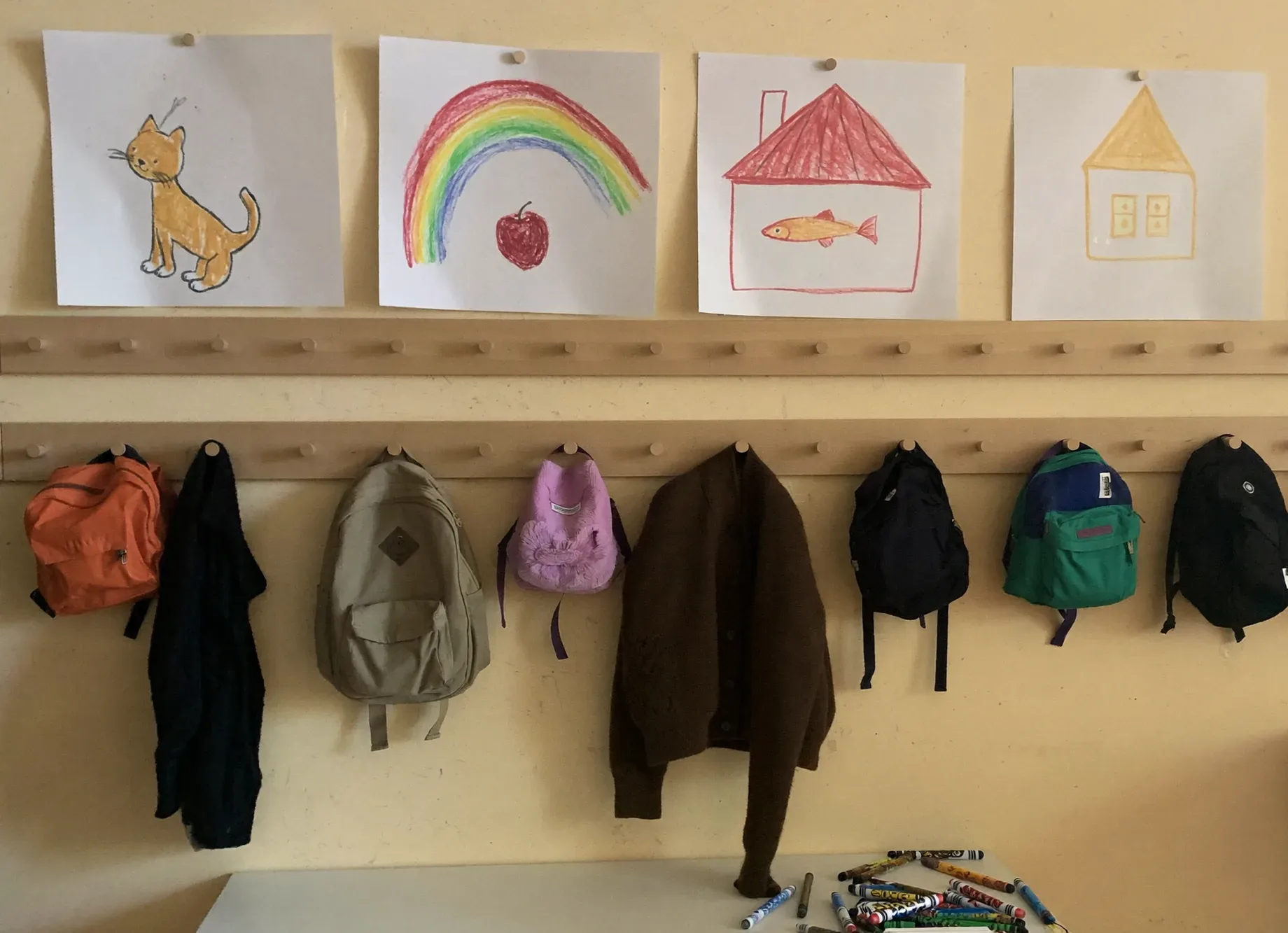
The first week of preschool has one job, and it isn’t the alphabet. It’s making twenty small people feel that the room is safe, that the grown-up in it is kind, and that they can do the things that happen here. Everything else, the letters, the numbers, the sitting still, comes easier once that’s true.
These are back to school activities for preschoolers built around that job, in the order you’ll need them: the first morning, the first day, the first week. Most need nothing but paper and crayons. Several are for the child who won’t talk yet, because there’s always one, and pushing makes it worse.
If you only take one thing: give every child a small, easy drawing to finish on day one. A child who has finished something in your room believes they can do things in your room. That belief is what you’re building all week.
Term starts in late August or September in the north and in late January or February in Australia and New Zealand. The activities are the same in both; the weather outside isn’t.
The first morning: activities that need no talking
Some children arrive chatty. Some arrive attached to a parent’s leg. Both need something to do with their hands in the first ten minutes, before you’ve said a word to the group.
1.Name tags they draw themselves
Paper squares, one per child, name already written by you. The child draws a picture next to it: a cat, a rainbow, whatever they choose from three you offer. A four year old can’t write their name neatly on day one but can recognize their own drawing on a peg tomorrow. The rainbow is the one most of them pick, and it’s seven lines.
2.A coloring sheet on every table
Put out a coloring page before anyone arrives, with crayons in the middle of the table. A child who can’t yet say “hello” can sit down and color, and that’s a start. The coloring pages are one page per drawing, printable in a minute.
3.The quiet corner, set up before day one
A basket of picture books, two cushions, something to hold. Not a naughty corner: a place a child can go when the room is too much. Show it to everyone in the first hour so it’s an option, not a punishment.
4.One tablet, one easy drawing
If you have a class tablet, put the apple on it: five lines, done in three minutes, and it reads each step aloud, so a child who’s not ready to talk to you can still be told what to do next by a friendly voice. Take turns, two minutes each. By snack time half the room has drawn something.
Day one: names, faces and where things are
By mid-morning you can gather them. These are the sitting-together activities that work on day one, when nobody knows anyone.
5.The name song, with a picture
Any name song works. The addition that makes it stick: as each child is sung, hold up their name tag with their drawing on it. Name, face, picture, three times in a row. By Friday every child knows every other child’s drawing, which is how they’ll find each other’s pegs.
6.“This is my face” on a paper plate
Hand mirrors, paper plates, crayons. Not accuracy, just a face. Put them all up before pick-up on day one, so parents see a wall of twenty faces on their first collection and every child can point to theirs.
7.The room tour, with jobs
Walk the room in a snake. At each place, a child gets a job: “Leo, you’re in charge of showing people where the tissues are.” Tomorrow Leo will show three people where the tissues are, unasked. Jobs give a nervous child a reason to talk.
8.The who’s-here board
A chart with every child’s name and their drawing. Each morning they move their marker from “home” to “here.” It’s a routine by day three, counting by week two, and a small purposeful thing to do the moment a reluctant child walks in.
Days two and three: the first real drawings
Once the room has settled, do a drawing together. A whole-class drawing, one line at a time, is the calmest fifteen minutes a preschool room gets in the first week, and it ends with every child holding the same finished picture, which is a powerful thing on a Tuesday.
9.The class cat
Put the cat on the whiteboard and draw it together: you draw a line, they draw the same line, you wait for everyone, then the next. Twenty-eight lines. Every child ends with a cat. Do this one on day two, when they can sit for fifteen minutes and not before.
10.Draw the fish, on the tablet
Once they’ve done one together, let them do one alone. The fish is twelve lines and the app checks each one, so it needs no adult at the table. This is the moment you find out which children can work independently and which ones need you next to them, which is worth knowing by Wednesday.
11.Draw your house
A house is a square, a triangle, a door, two windows. Then: “who lives in it?” and they add their family as stick people. It’s the drawing that goes home, and the one that gets a child talking about home, which tells you a great deal.
12.Draw a tree, and keep it
Draw a tree in the first week and date it. Draw it again at the end of term. Put them side by side. There’s no better “look how far you’ve come” for a four year old than their own two trees.
Days four and five: the first-week wall
By Thursday the wall is your best friend. A room with the children’s own work on it is a room they belong to.
13.Every drawing goes up
Name tags, faces, cats, houses. All of it, on one wall, at child height. Don’t curate. The child whose cat looks least like a cat needs it on the wall most.
14.The class collection
Give each child a printable pack page from the same set, farm animals or vehicles, and put the finished sheets together as one big picture. Twenty children, one farm. Good for the corridor outside the room, where parents wait.
15.Show-and-tell, drawings only
Friday circle: each child holds up one drawing from the week and says one thing about it. Not their favorite toy from home, which starts a comparison contest. A drawing they made here, which starts a conversation about here.
For the children who need more time
Every class has two or three who take longer to settle. These are for them, and they work all term.
16.A drawing with a friendly voice
The voice guide on the tablet, Pip, reads each line aloud: “Draw a big circle. Now the left ear.” For a child who won’t take instructions from a new adult yet, a small cartoon face on a screen is somehow easier. Let them do a drawing alone in the quiet corner with the sound on.
17.Same drawing, three days running
A child who did the fish on Wednesday will happily do the fish again on Thursday, and better. Repetition is comfort. Don’t rush them on to the next thing; the next thing is what they’re anxious about.
18.The buddy peg
Pair a settled child with a nervous one for peg time, snack and lining up. “You two are the cat and the rainbow.” Children who share a job share a bond.
A first week that actually fits
Nobody does all eighteen. Here’s a first week that works in a real room:
- Monday: name tags, coloring sheets on the tables, the room tour with jobs. Faces on plates in the afternoon. Wall up before pick-up.
- Tuesday: name song with pictures, the who’s-here board, the class cat on the whiteboard.
- Wednesday: the fish on the tablet, in turns. Draw your house.
- Thursday: the tree, dated. The class collection.
- Friday: show-and-tell, drawings only. A quiet drawing for anyone who needs it.
If you’re running it on class tablets, DrawAlong for Schools lets you set “Draw yourself” or “Draw your house” as the task for the whole room and shows you each drawing as it’s finished, by name, which on a Wednesday of the first week is the fastest way to learn who’s doing fine and who isn’t.
Running the first week on class devices?
Set up a class in two minutes, no student loginsFrequently asked questions
What should a child do on the very first morning of preschool?
Something with their hands that needs no talking and can’t go wrong: color a sheet, draw a picture next to their name, hold a book in the quiet corner. Save circle time and games for later in the day, once they know where the bathroom is and which peg is theirs.
How long should first-week activities last?
Ten minutes for anything whole-class, fifteen for a drawing done together, and as long as they like for anything a child chooses alone. Attention is short in week one and shorter for the nervous ones. Stop before it stops working.
What about children who won’t talk?
Don’t make talking the price of joining in. Give them a job that needs no words (handing out paper), a drawing with the voice guide reading the steps, and a buddy. Most start talking in week two or three when nobody’s waiting for them to.
Do I need iPads for any of this?
No. Every drawing here works on a whiteboard with the class following, or on paper from the coloring pages and printable packs. A tablet earns its place for the children who need to work alone with a voice to guide them. There’s more on running step-by-step drawing with a class in the directed drawing guide.
More on preschool activities
All articles on preschool activities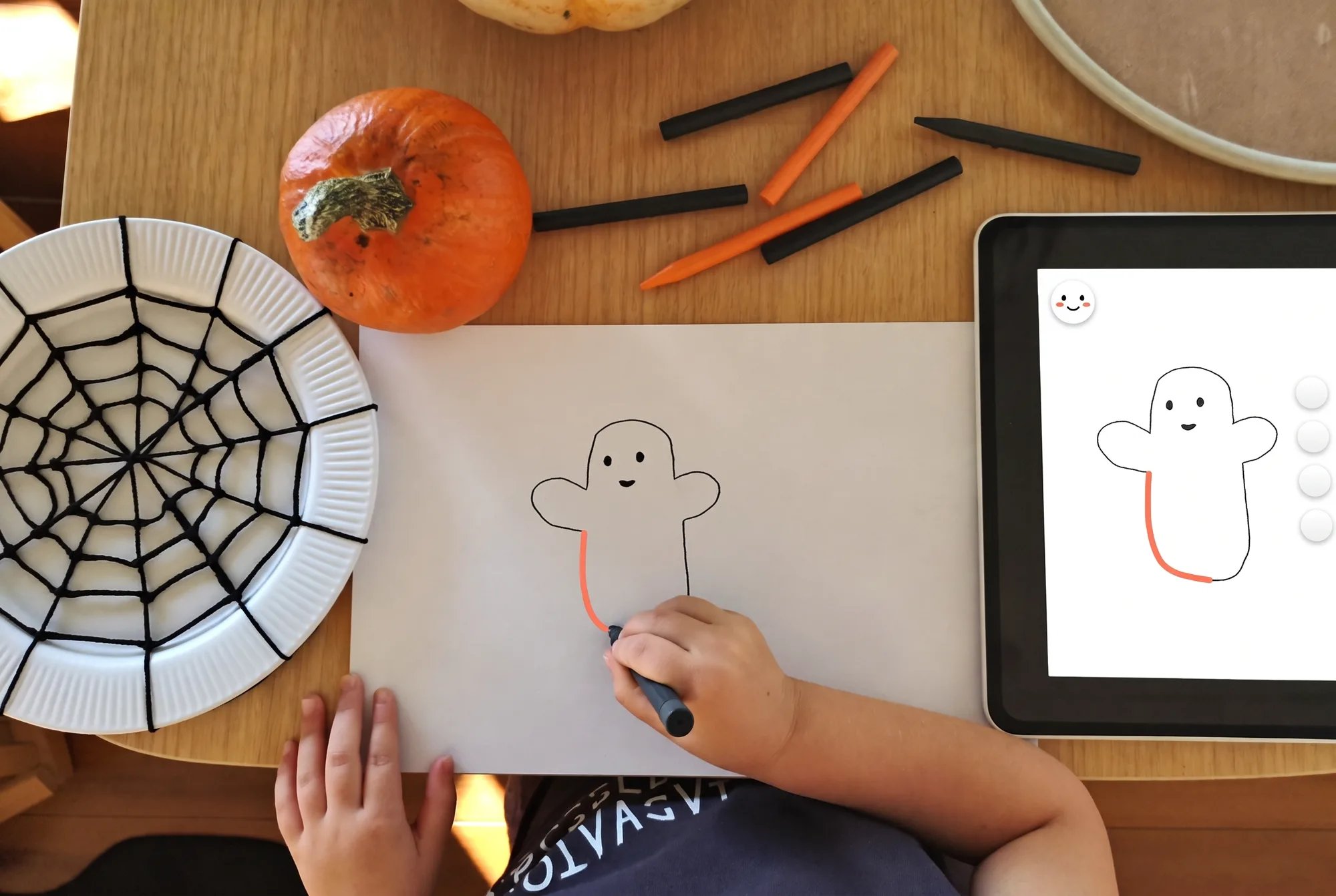
Halloween Preschool Activities: 21 Ideas That Aren’t Scary
Four working days between "Halloween is coming" and the costume parade. Here is what to do with them: 21 activities that work with real preschoolers, most of them free, half of them quiet, none of them scary.
· 9 min read
Ready to draw?
DrawAlong guides kids through easy drawings one line at a time, free in the browser.
Try it free