
Step by Step Drawing Animals for Kids: 15 Easy Ones, in Order
· 9 min read
Ask a four year old what they want to draw and it will be an animal. Not a house, not a car. A cat, a dog, a horse, something with a face. Which is lucky, because animals are also the best thing to learn on: every one of them is a big shape for the body, a smaller shape for the head, and a few lines that make it that animal and not another one.
This is a list of 15 animals, ordered from easiest to hardest by the one thing that actually matters to a small child: how many lines it takes. The fish is 12. The tiger is 40. Everything in between is a step up, and a child who does them in roughly this order will find that none of them are a jump.
If you only want one answer: start with the fish. Twelve lines, done in five minutes, and it looks like a fish the first time.
How step by step drawing works, for anyone who hasn’t done it
The child sees one line. They draw that line. Then they see the next one. Twelve or twenty lines later there is an animal on the page, and it looks like the thing it was meant to be.
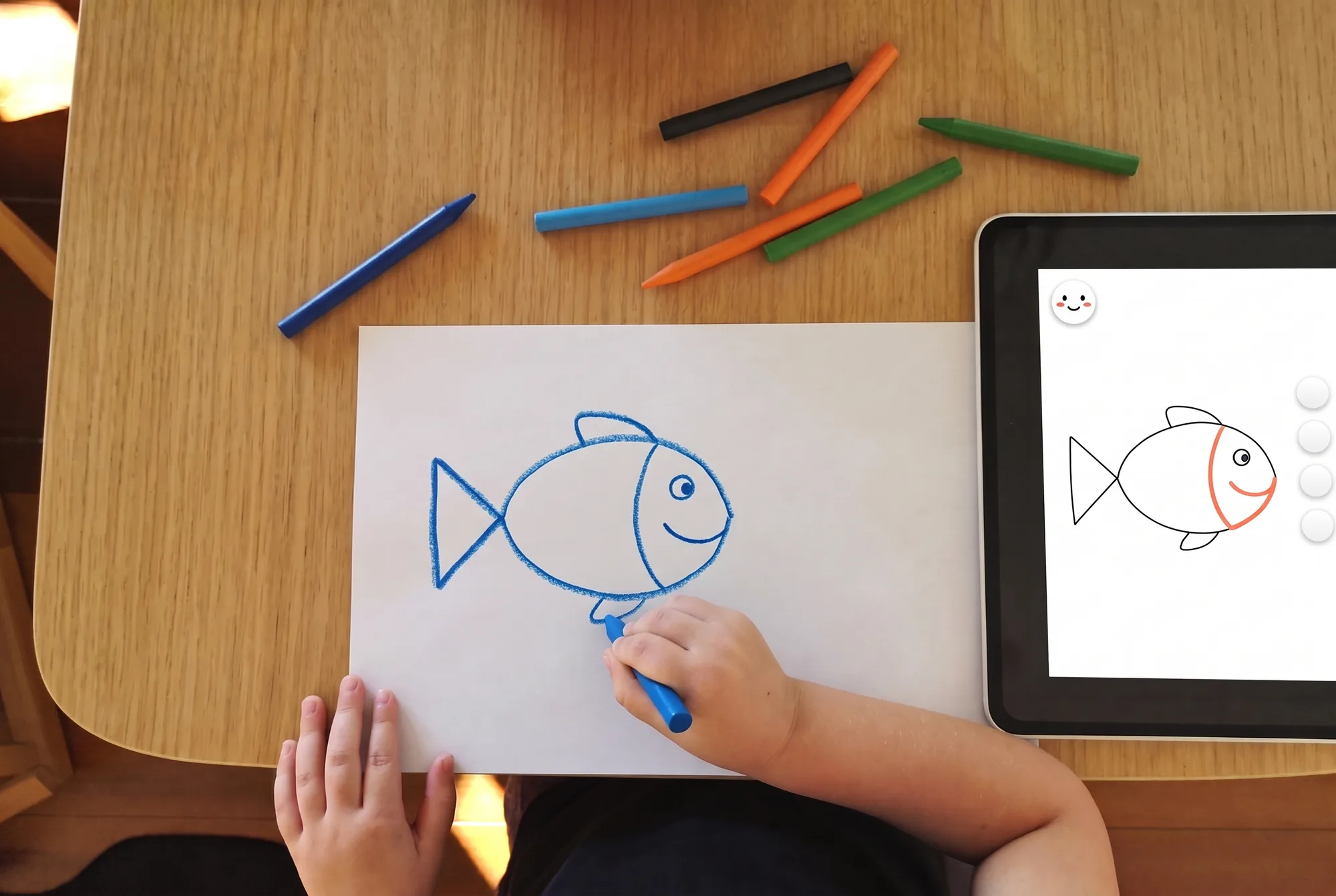
That is the whole method. Teachers call it directed drawing or guided drawing, and there’s a longer piece on why teachers use it. For a beginner, the thing to know is that it works because the child never has to hold the whole animal in their head. They only ever have to draw one line. Wobbly is fine. Wobbly is expected.
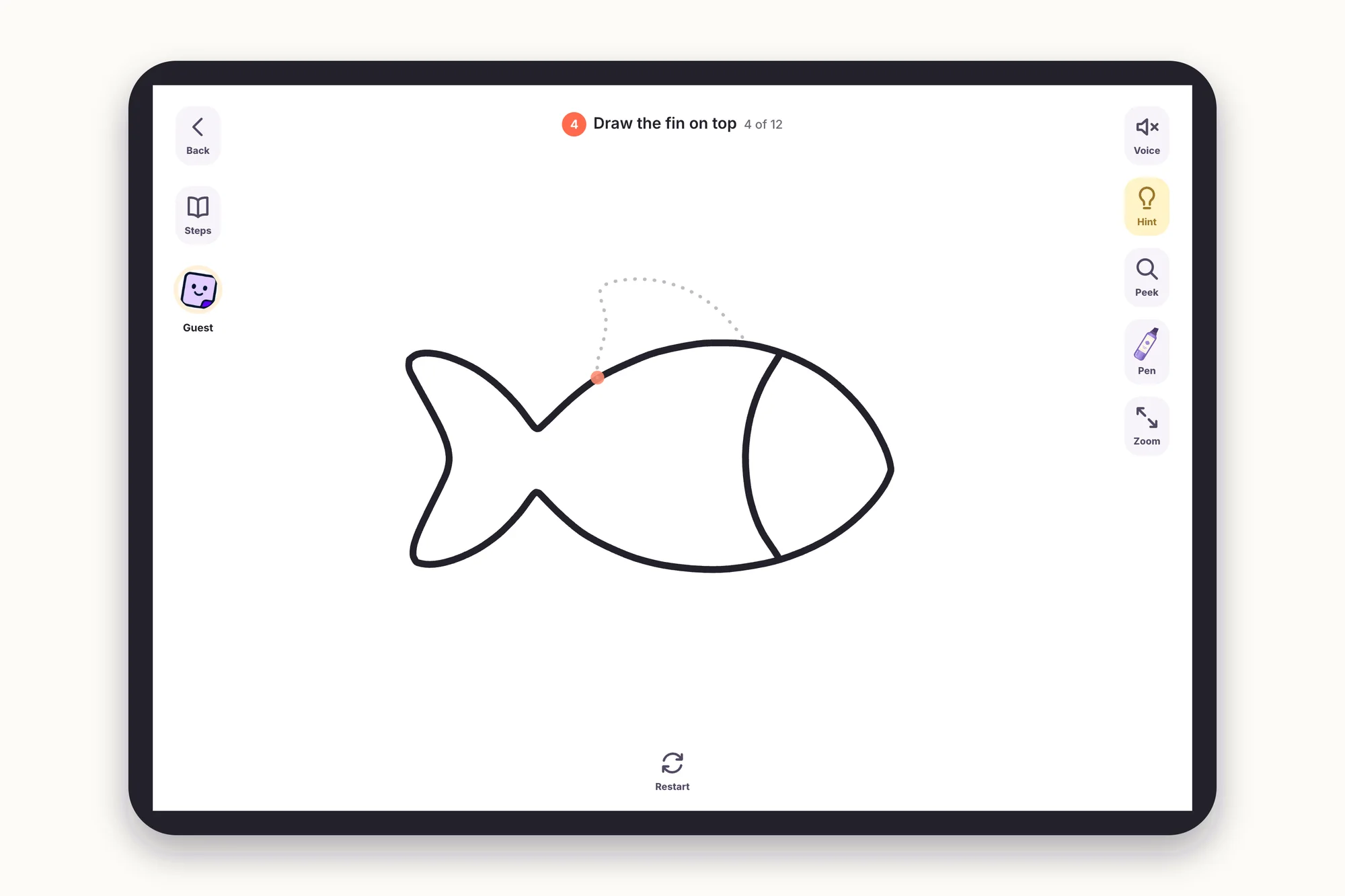
On paper, a grown-up draws each line on a whiteboard or across the table, and the child copies. On a tablet, DrawAlong shows the line, checks it, and reads the step out loud, so a child who can’t read yet can do it alone. Both work. The paper version needs you; the tablet version doesn’t, which is the only real difference.
Every animal below has both: an interactive version and a written one you can follow on paper.
Under 15 lines: the first animals
These are the ones for a child who has never done a step-by-step drawing before, or for a three year old. Short enough to finish before attention runs out, and every one of them looks like the animal.
1.Fish (12 lines)
The easiest animal on the site, and the right one to start with. An oval, a tail, a fin, an eye, a smile. Once it’s done, let them add stripes, spots, bubbles, whatever they like; it’s the drawing children most want to decorate. Draw the fish or on paper.
2.Penguin (12 lines)
Also twelve lines, and it looks like a penguin from the second line. Children love this one because the white belly is a shape inside the body, which is the first time most of them draw something inside something else. Draw the penguin or on paper.
3.Baby chick (13 lines)
A circle, a smaller circle, a beak, two stick legs. Thirteen lines and it’s the drawing every Easter and every spring lesson needs. Color it yellow and it’s done. Draw the chick or on paper.
4.Duck (14 lines)
The chick, grown up. Same shapes, one more curve for the bill, and the first animal on this list with a proper body-and-head shape that children will reuse on almost everything else. Draw the duck or on paper.
5.Elephant (14 lines)
Surprisingly easy. The trunk is one long curve, the ear is one big one, and children are amazed that an animal this big is only fourteen lines. It’s the one to do when a child says "I can’t draw." Draw the elephant or on paper.
16 to 20 lines: the next step up
A child who has done two or three of the first group is ready for these. The extra lines are mostly detail: teeth, spots, a second leg. The shapes are the same.
6.Sheep (16 lines)
The body is a cloud. That’s the whole trick, and once a child knows it they draw sheep on everything. Part of the farm animals pack if you’d rather print it. Draw the sheep or on paper.
7.Shark (16 lines)
The fish, with a bigger fin and a row of triangle teeth. Children who did the fish first do this one in a few minutes, and it’s the most-requested animal among five and six year old boys by a wide margin. Draw the shark or on paper.
8.Frog (19 lines)
Two big eyes on top of the head are what make it a frog, and they go on first, which children find funny. Good for a pond or spring theme, and the green is easy. Draw the frog or on paper.
9.Dog (20 lines)
The first one most children ask for by name. Floppy ears, a tail, four legs, and it’s the drawing where children start choosing their own colors without being told: brown dog, spotty dog, purple dog. Twenty lines is the top of what a four year old will do in one sitting, so do it in the morning. Draw the dog or on paper.
10.Bear (20 lines)
Same count as the dog, rounder shapes, and the round ears on top are the whole difference. Do the dog and the bear a few days apart and the child will start to see that animals are built from the same pieces arranged differently, which is the actual lesson. Draw the bear or on paper.
20 to 30 lines: when they’re ready for more
These take fifteen to twenty minutes and suit fives and sixes, or younger children who have done a lot of the earlier ones. This is where the drawings start to look properly good on the fridge.
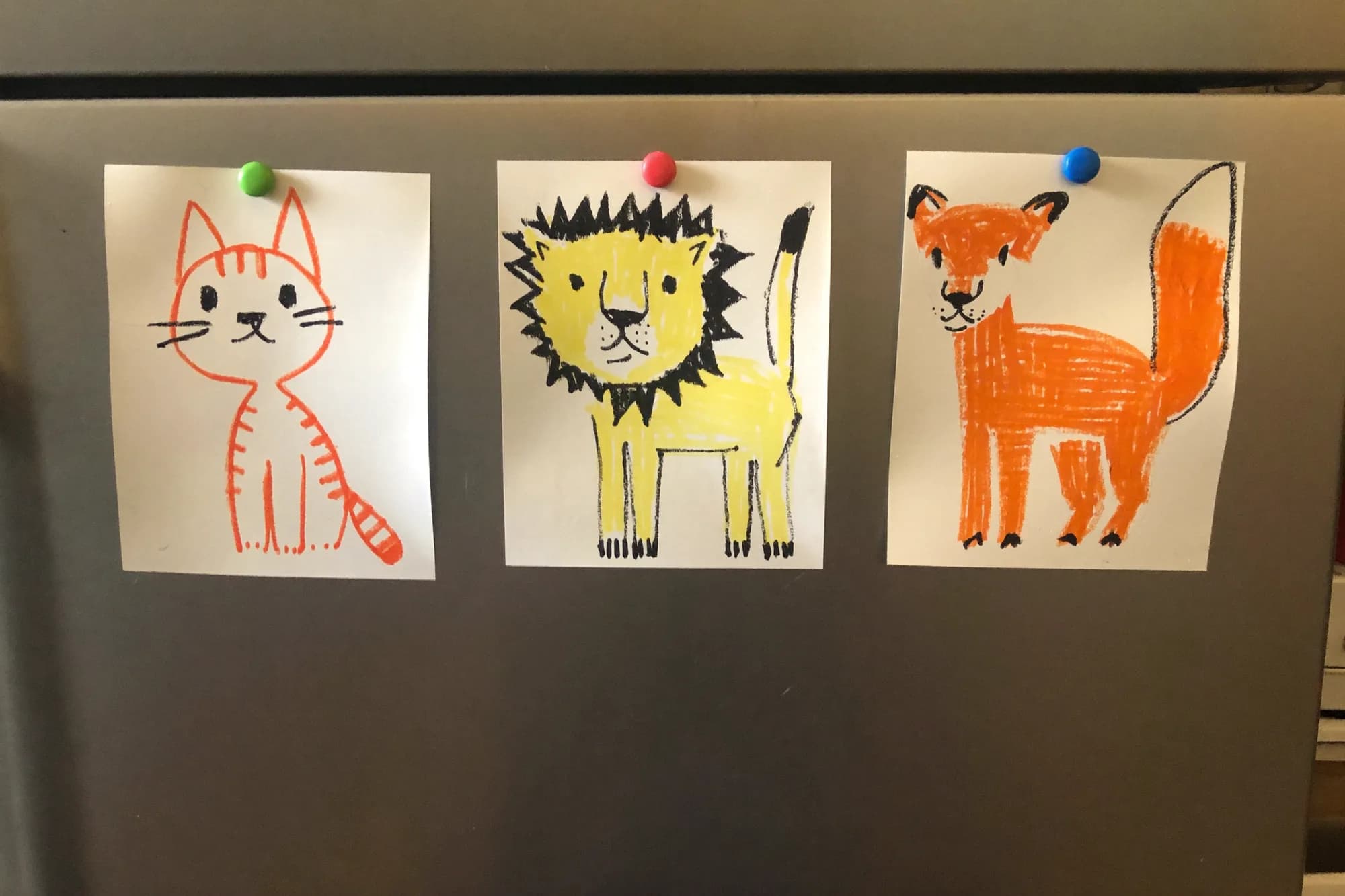
11.Fox (24 lines)
Pointy ears, a pointy nose, and a big bushy tail that children put real effort into. The fall animal, and the one that gets colored most carefully. Draw the fox or on paper.
12.Lion (25 lines)
A cat’s face with a mane around it. The mane is a lot of the 25 lines, and it’s fun to draw because it’s the same zigzag over and over. The finished lion is the drawing children most often ask to do again. Draw the lion or on paper.
13.Cat (28 lines)
The classic. Most children want to start here, and if yours does, let them; it’s fine, just slower. Two triangle ears, whiskers, a long tail, and it is the drawing that ends up on more fridges than any other on the site. Draw the cat or on paper.
14.Turtle (28 lines)
The shell is a pattern of shapes inside a big shape, which is a new skill, and children get absorbed in it. Slow, calm, and the one to do at the end of a day. Draw the turtle or on paper.
The one to aim for
15.Tiger (40 lines)
Forty lines, and about half of them are stripes. A six or seven year old who has worked through the list will finish it, and they will know they’ve done something. Frame this one. Draw the tiger or on paper.
Doing these with a beginner: five things that help
- Let them pick. A child will do a 28-line cat they chose over a 12-line fish they didn’t. Show them three and let them point.
- One sitting, one animal. Ten to twenty minutes. Don’t go for two, even when it’s going well. Especially when it’s going well.
- No erasers. A wobbly line is a line. Fixing it teaches perfectionism, and perfectionism is what stops five year olds drawing.
- Color is theirs. The lines are guided; the coloring never is. Purple dogs are correct.
- Put it up. On the fridge, on the wall, on the classroom board. A drawing that goes on the wall gets drawn again tomorrow.
For a whole class, the same drawings work on a whiteboard with everyone following, or on class iPads with each child at their own pace and the finished animals arriving on the teacher’s screen.
Running this with a class?
Set up a class in two minutes, no student loginsFrequently asked questions
What is the easiest animal for a child to draw?
By line count, the fish: twelve lines, and it looks like a fish from the first attempt. The penguin is also twelve. If the child has a strong preference for another animal, start there instead; a chosen animal beats an easy one.
What age can a child start step by step drawing?
About three, with the shortest ones (fish, chick, penguin) and a grown-up drawing each line in front of them. Four and five year olds can do anything under about twenty lines alone on a tablet with the voice guide reading the steps. Twenty lines and up suits five to seven.
Is step by step drawing bad for creativity?
No, and the worry gets it backwards. A child who can draw a cat draws cats: in hats, in cars, on the moon. A child who can’t draw a cat draws nothing, or a scribble they’re unhappy with. The steps give them the cat; what they do with it afterwards is the creative part, and it happens more, not less.
Do I need a tablet?
No. Every animal here has a written step-by-step page you can follow on paper, and the printable packs put the coloring sheet, the steps and a trace page in one PDF. A tablet is useful when you want the child to do it alone; the app shows each line, checks it, and reads the step aloud.
What order should we do them in?
The order on this page: fish, penguin, chick, duck, elephant, then sheep, shark, frog, dog, bear, then fox, lion, cat, turtle, and the tiger last. It’s ordered by how many lines each takes, so nothing is a jump. But if a child asks for the tiger on day one, let them try; they’ll get halfway, and halfway to a tiger is still a good afternoon.
More on step by step drawing
All articles on step by step drawing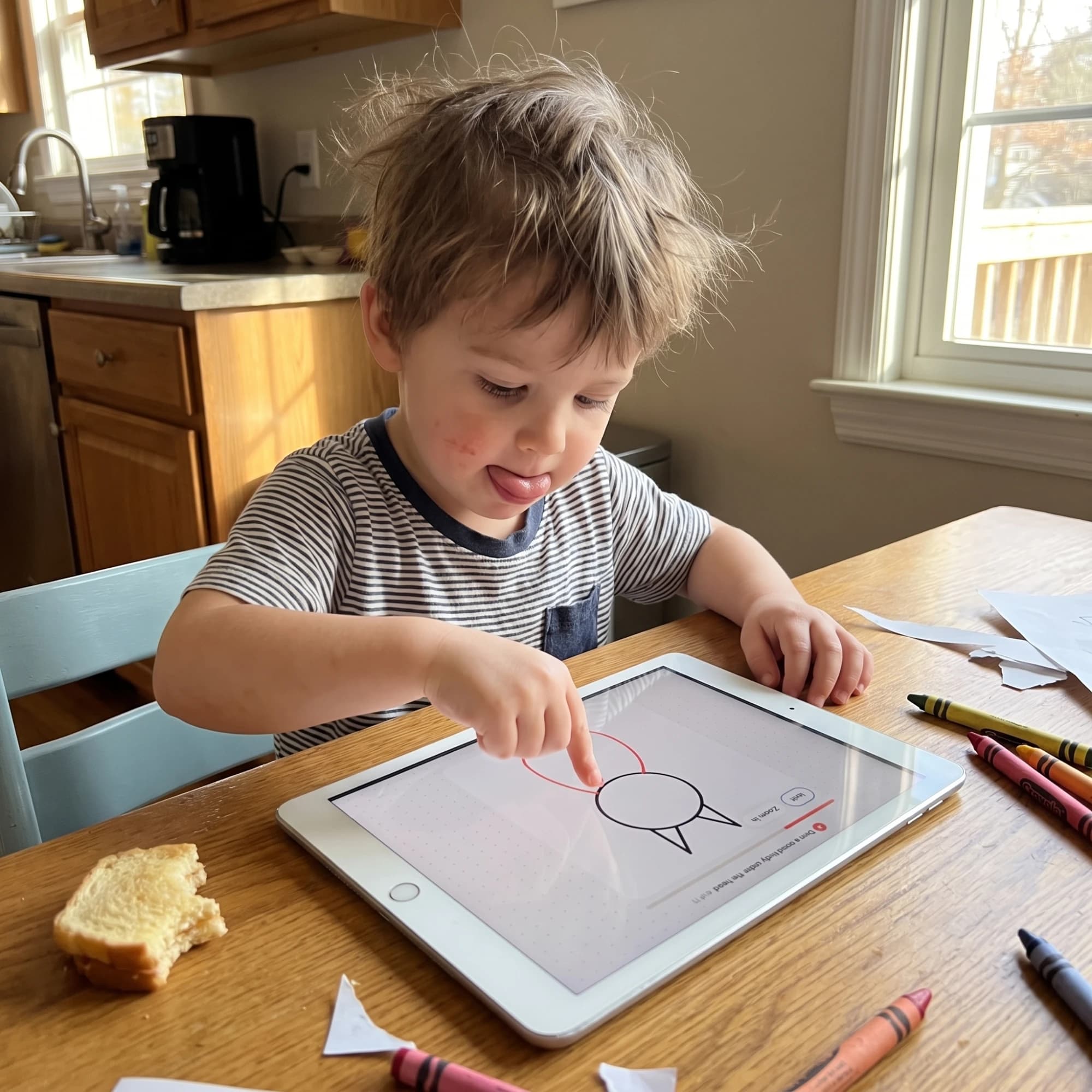
10 Easy Things for Kids to Draw (Step by Step)
Looking for easy things for kids to draw? Here are ten ideas ranked from easiest to trickiest, each one built from circles, triangles and simple curves.
· 6 min read
Ready to draw?
DrawAlong guides kids through easy drawings one line at a time, free in the browser.
Try it free